Disclaimer: This article is for information purposes only and does not constitute legal or financial advice.
If bailiffs have entered your home, you may be wondering just how far their powers extend.
Can they open your bedside drawers?
Can they look through wardrobes or kitchen cupboards?
Or do they have to leave your personal belongings alone?
The good news is:
👉 Yes, bailiffs can search through drawers, cupboards and other storage areas once they have lawfully entered your home, but only if they are looking for goods they are legally entitled to take control of.
However, they do not have the same search powers as the police and cannot search your home however they like.
In this guide, we’ll explain what bailiffs can and cannot do once they’re inside your property.
Can Bailiffs Search Through Your Drawers? (Quick Answer)
👉 Yes, they can.
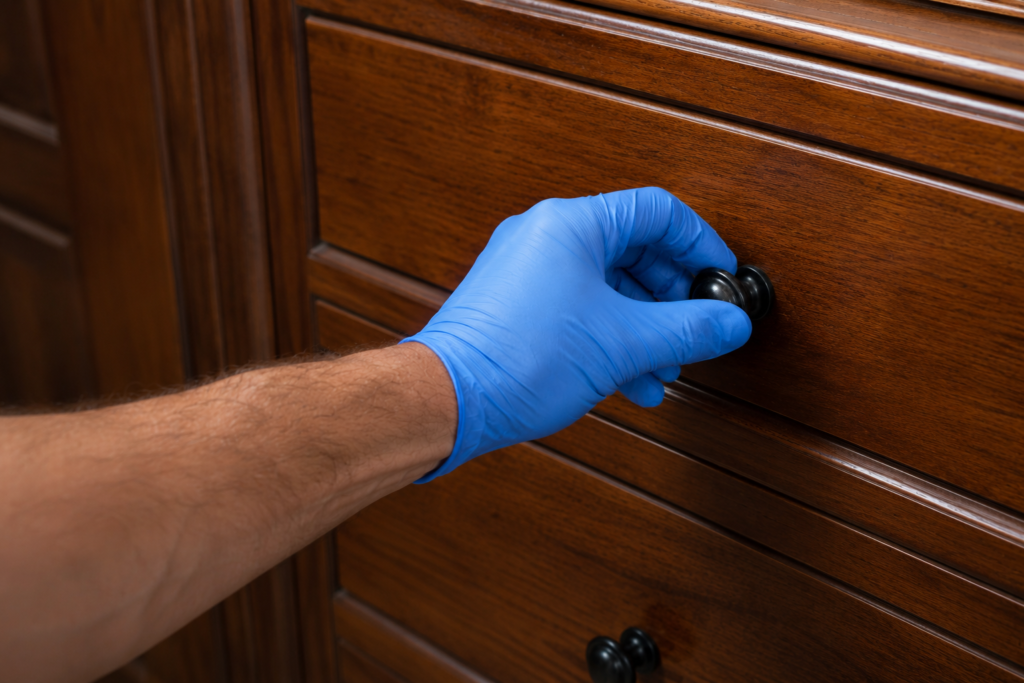
If a bailiff has lawfully entered your home, they may look inside drawers, cupboards, wardrobes and other places where valuable goods might reasonably be kept.
However:
- ✅ they must be carrying out lawful enforcement;
- ✅ they should only search for goods they are entitled to take control of; and
- ❌ they cannot carry out a criminal-style search like the police.
Their role is to locate goods that may be used to satisfy the debt – not to investigate you.
Bailiffs vs Police: What Are the Differences?
| Bailiffs (Enforcement Agents) | Police Officers |
|---|---|
| Purpose: Collect unpaid debts and enforce court or local authority orders. | Purpose: Prevent and investigate crime, protect the public and enforce criminal law. |
| Can they search your home? Yes, but only after lawful entry and only to locate goods they may legally take control of. | Can they search your home? In certain circumstances, such as with a search warrant or where other legal powers apply. |
| Can they open drawers and cupboards? Yes, if they have lawfully entered and are searching for goods that may be taken into control. | Can they open drawers and cupboards? Yes, where authorised by law during a lawful search. |
| Can they force entry? Usually no on a first visit for most common debts, although limited exceptions exist for certain types of debt and circumstances. | Can they force entry? Police have broader legal powers to force entry in certain situations, such as executing a warrant or responding to emergencies. |
| Can they investigate crimes? ❌ No. Bailiffs are not criminal investigators. | Can they investigate crimes? ✅ Yes. Investigating criminal offences is one of the police’s primary roles. |
| Can they seize property? Yes, but only goods they are legally entitled to take control of to recover a debt. Many items are exempt. | Can they seize property? Yes, where authorised by law, for example as evidence or under powers relating to criminal investigations. |
| Can they arrest people? ❌ No. | ✅ Yes, where the legal grounds for arrest are met. |
Key Takeaway: Although bailiffs may search parts of your home after they have lawfully entered, their powers are much narrower than those of the police. Bailiffs are there to enforce debts and identify goods they may legally take control of; they are not carrying out criminal investigations.
What Happens For Most People?
Let’s take a typical example.
Sarah allows a bailiff into her home.
The bailiff is looking for valuable items that could potentially be taken into control.
👉 They may open:
- bedside drawers;
- kitchen cupboards;
- wardrobes;
- cabinets; and
- other normal storage areas.
This is usually considered part of identifying goods that may belong to the debtor.
Can Bailiffs Open Bedroom Drawers?
👉 Yes.
Once lawfully inside, bailiffs may look inside bedroom drawers if they reasonably believe valuable goods may be kept there.
Examples could include:
- jewellery;
- watches;
- cameras; or
- other valuable items.
Can Bailiffs Look Inside Wardrobes?
👉 Yes.
Wardrobes may be opened if they could contain goods that are capable of being taken into control.
However, ordinary clothing is usually of little interest because many everyday personal items have little resale value or may be exempt from seizure.
Can Bailiffs Open Kitchen Cupboards?
👉 Yes.
Kitchen cupboards may be opened while searching for valuable goods.
However:
👉 Bailiffs are not looking for food, crockery or everyday household essentials.
They are generally looking for items of significant resale value.
Can Bailiffs Look Under the Bed?
👉 Potentially, yes.
If valuable goods could reasonably be stored there, a bailiff may look underneath a bed.
Again, the purpose is to identify goods – not to conduct a criminal investigation.
Can Bailiffs Open Locked Drawers or Cabinets?
This depends on the circumstances.
👉 A bailiff should not normally force open locked drawers, cupboards or cabinets simply to see what’s inside.
Nor should they cause unnecessary damage to furniture while carrying out enforcement.
If they have already lawfully entered, they are expected to carry out enforcement reasonably and proportionately.
Can Bailiffs Search My Entire House?
👉 Usually, yes – IF they have lawfully entered.
They may move between rooms looking for goods that belong to the debtor.
However:
👉 They are not carrying out a police search.
Their purpose is limited to identifying goods that may legally be taken into control.
What Can’t Bailiffs Do?
Even after lawful entry, bailiffs do not have unlimited powers.
For example, they should not:
- ❌ search your home as though they were police officers;
- ❌ deliberately cause unnecessary damage;
- ❌ seize goods that clearly belong to someone else;
- ❌ take exempt goods, such as many essential household items or protected tools of the trade.
You may also find our guide on Can Bailiffs Take Items That Don’t Belong to You? helpful.
What If I Don’t Want Bailiffs Searching My Home?
The simplest way to prevent a search of your home is usually to avoid allowing bailiffs lawful entry in the first place, where you are legally entitled to do so.
Once lawful entry has been gained, the bailiff’s powers are generally much wider.
You may also find our guide on Can Bailiffs Enter Through an Unlocked Door? helpful.
Realistic Examples
Sarah Lets the Bailiff In
Sarah opens the door and allows the bailiff inside.
👉 The bailiff may open cupboards and drawers while identifying goods.
David Keeps the Door Closed
David speaks through the letterbox.
👉 The bailiff never gains lawful entry.
👉 They cannot search David’s home.
Emma Lives With Her Parents
Emma owes the debt but lives with her parents.
The bailiff enters lawfully.
👉 They may search the property for Emma’s belongings.
👉 They should not take goods that clearly belong to her parents.
Common Myths
Myth: Bailiffs cannot open drawers.
❌ False.
If they have lawfully entered your home, they may look inside drawers where valuable goods might reasonably be kept.
Myth: Bailiffs can search your home like the police.
❌ False.
Their powers are much more limited and relate only to identifying goods for enforcement.
Myth: Bailiffs can damage furniture to search it.
❌ Usually false.
They should not cause unnecessary damage simply to look for valuables.
Myth: Bailiffs can take anything they find.
❌ False.
Many goods are exempt from seizure, and items belonging to someone else should not usually be taken.
Key Takeaway
If bailiffs have lawfully entered your home, they can usually search through drawers, cupboards, wardrobes and other places where valuable goods may reasonably be kept. However, they do not have the same powers as the police and cannot search your home without limits. Their role is to identify goods they may legally take control of – not to conduct a general search of your property.
Frequently Asked Questions
Can bailiffs open my bedside drawers?
Yes. Once lawfully inside your home, they may open bedside drawers while looking for valuable goods.
Can bailiffs look inside wardrobes?
Yes. They may check wardrobes if they reasonably believe goods capable of being taken into control are inside.
Can bailiffs open locked drawers?
They should not normally force open locked drawers or cabinets simply to search them.
Can bailiffs search every room?
Usually, yes. If they have lawfully entered, they may move through the property looking for goods that belong to the debtor.
Can bailiffs search my home if I don’t let them in?
Usually not. If bailiffs have not gained lawful entry, they generally cannot search your home.
Need Further Support?
If you’re worried about bailiffs visiting your home or searching your property, free and confidential help is available.
- Citizens Advice – Independent advice on bailiffs, debt and your legal rights.
- National Debtline – Free debt advice and practical guidance on dealing with enforcement agents.
- StepChange Debt Charity – Free debt advice and support if you’re struggling with debt.
- Samaritans – Confidential emotional support if debt or financial worries are affecting your wellbeing.
These organisations offer free support and are not affiliated with this website.