Disclaimer: This article is for informational purposes only and does not constitute legal or financial advice.
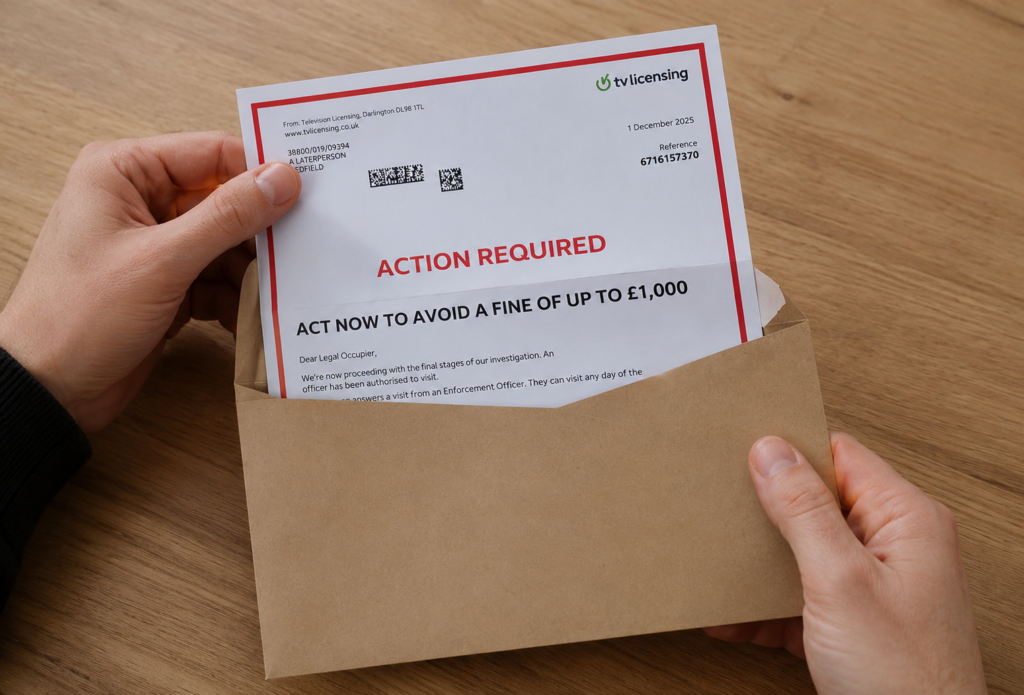
Receiving a letter from TV Licensing can be worrying.
Perhaps the envelope mentions:
- “Act now to avoid a fine”
- “An enforcement officer has been authorised to visit”
- “You may be prosecuted”
Or perhaps you’ve received paperwork from a court.
The good news is:
👉 Receiving a letter from TV Licensing does not automatically mean you’ve been fined.
Many people use the phrase “TV licence fine” to describe any official-looking letter they receive, but there are actually several stages in the process.
Understanding which stage you’ve reached is the first step towards deciding what to do next.
Quick Answer
👉 Before doing anything else, identify what type of letter you’ve received.
Generally speaking, it will fall into one of three categories:
Investigation letter
This is not a fine.
TV Licensing regularly sends letters to addresses where:
- no TV licence is registered; or
- a No Licence Needed declaration is not in place.
These letters may include phrases such as:
- “Act now to avoid a fine.”
- “An enforcement officer has been authorised to visit.”
Receiving one of these letters does not mean you’ve been prosecuted or fined.
Single Justice Procedure Notice (SJPN)
This means a criminal case has been started.
If you receive an SJPN, you should not ignore it.
Instead, you normally need to respond by the deadline and indicate whether you plead guilty or not guilty.
Court Fine
Only a magistrates’ court can impose a TV licence fine.
TV Licensing itself cannot fine you directly.
If you’re convicted, the court can impose:
- a financial penalty (up to the statutory maximum for the offence);
- court costs; and
- a victim surcharge.
Understanding the Different Letters
One of the biggest causes of confusion is that people refer to every TV Licensing letter as a “fine.”
In reality, the documents you receive can be very different.
Investigation Letters
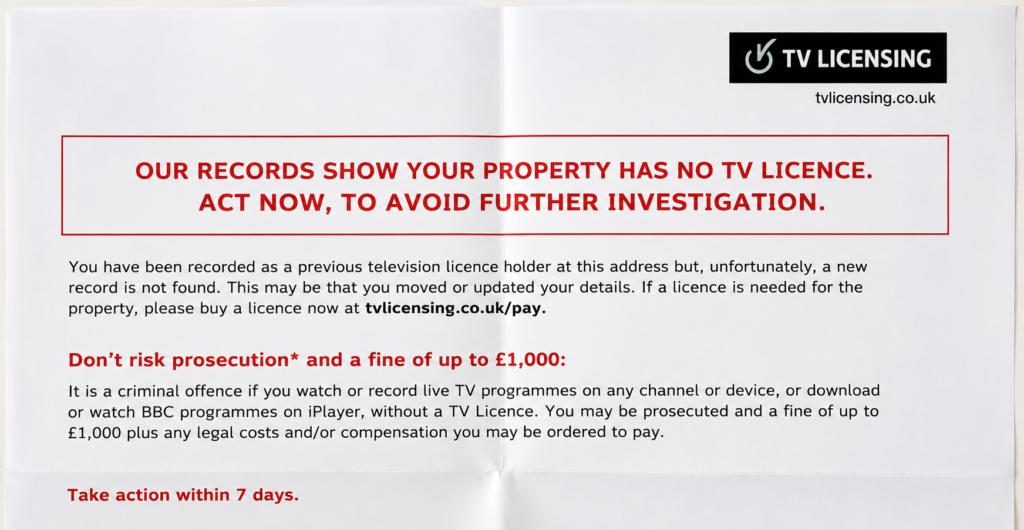
Image: An example of what a TV Licence investigation letter may look like.
These are the letters most households receive.
They are often sent where:
- there is no registered TV licence; or
- no valid No Licence Needed declaration exists.
They often contain strongly worded phrases encouraging you to respond.
Receiving one of these letters does not mean you’ve broken the law, nor does it mean a court has fined you.
Single Justice Procedure Notice (SJPN)
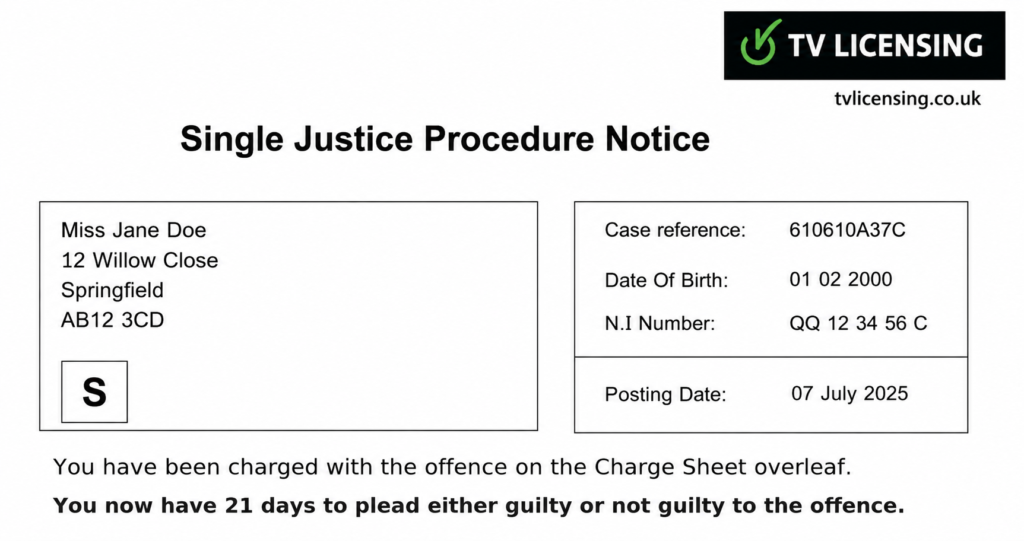
Image: An example of what a Single Justice Procedure Notice letter may look like.
An SJPN is much more serious.
Unlike an investigation letter, it means court proceedings have begun.
The notice explains:
- the allegation;
- how to respond;
- the deadline for responding; and
- whether you wish to plead guilty or not guilty.
If you receive one, read it carefully and respond before the deadline.
Ignoring an SJPN can result in the court deciding the case without hearing your side.
Court Fine
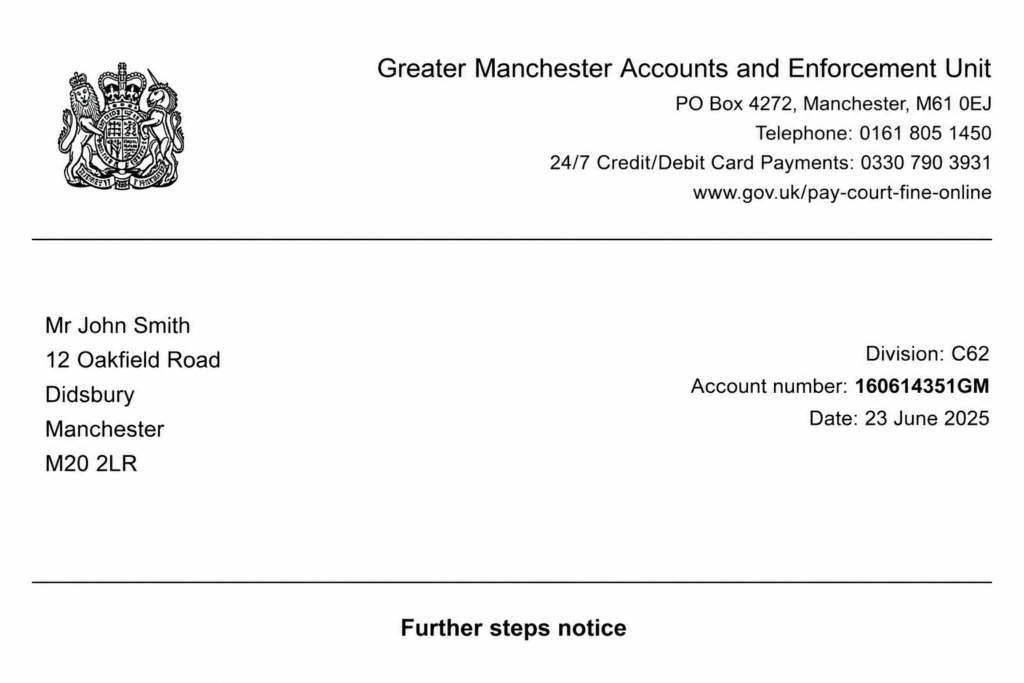
Image: An example of what a court-issued fine may look like.
A TV licence fine can only be imposed after a magistrates’ court has considered the case.
If convicted, the court may order you to pay:
- a fine;
- prosecution costs; and
- a victim surcharge.
The exact amount depends on the circumstances and your financial situation.
What Should You Do Next?
The correct next step depends on your circumstances.
If You Do Not Need a TV Licence
If you genuinely do not watch or record live television and do not use BBC iPlayer, you may not need a TV licence.
Although you are not generally required by law to respond to investigation letters, many people choose to submit a No Licence Needed declaration through the official TV Licensing website.
Doing so can reduce or stop further reminder letters for a period of time, although TV Licensing may contact you again in the future to confirm your circumstances.
If You Do Need a TV Licence
If you:
- watch live television on any channel; or
- use BBC iPlayer,
you are generally required by law to have a valid TV licence.
Buying a licence promptly may prevent the situation from escalating if no prosecution has already begun.
If You’ve Received Court Paperwork
If you’ve received a Single Justice Procedure Notice or other court documents:
👉 Do not ignore them.
Read the paperwork carefully and respond within the stated deadline.
If you’re unsure how to respond, seek independent legal advice as soon as possible.
What About Home Visits?
Many people worry that receiving a letter means someone can immediately enter their home.
That isn’t how the law works.
TV Licensing enforcement officers can:
- knock on your door;
- ask to speak with you; and
- ask for permission to enter.
However, they do not normally have the legal power to force entry into your home simply because you don’t have a TV licence.
Only in limited circumstances – such as where a court has issued a search warrant – can forced entry be authorised.
You may also find our guide Can TV Licence Officers Force Entry? helpful.
What Happens If You Ignore a Court Fine?
If a magistrates’ court has already fined you, ignoring the fine can lead to further enforcement action.
If you cannot afford to pay immediately, contact the court as soon as possible to discuss your options.
Courts will often consider affordable payment arrangements where appropriate.
Realistic Examples
Sarah Receives a Court Fine
Sarah pleads guilty to a TV licensing offence.
The magistrates’ court imposes a fine.
👉 She should follow the payment instructions or contact the court promptly if she cannot afford to pay immediately.
David Receives a Single Justice Procedure Notice
David assumes he has already been fined.
After reading the paperwork, he realises no decision has yet been made.
👉 He still has an opportunity to respond before the court considers the case.
Emma Ignores the Fine
Emma decides to throw the paperwork away.
Months later, the court begins enforcement action to recover the money.
👉 Ignoring court paperwork often makes the situation more difficult to resolve.
Common Myths
Myth: TV Licensing can fine you directly.
❌ False.
Only a magistrates’ court can impose a criminal fine.
Myth: Every investigation letter means you’ve been prosecuted.
❌ False.
Investigation letters are not court fines.
Myth: Receiving a warning letter means officers can force entry.
❌ False.
TV Licensing officers do not normally have powers to force entry without lawful authority, such as a search warrant.
Myth: You must reply to every investigation letter.
❌ Not necessarily.
Whether you choose to respond depends on your circumstances. If you genuinely do not need a TV licence, many people choose to submit a No Licence Needed declaration instead.
Key Takeaway
👉 Don’t assume every TV Licensing letter is a fine.
The most important thing is to identify which stage you’ve reached.
- Investigation letter → not a fine.
- Single Justice Procedure Notice → court proceedings have started.
- Court fine → imposed only after a magistrates’ court has convicted you.
Understanding the difference will help you decide what to do next and avoid making the situation worse.
Frequently Asked Questions
Can TV Licensing issue fines?
No. Only a magistrates’ court can impose a criminal fine following a conviction.
Can I pay a TV licence fine in instalments?
Often, yes. Contact the court as soon as possible to discuss your options.
What happens if I ignore a TV licence fine?
The court may take further enforcement action to recover the money owed.
Can I appeal a TV licence fine?
Possibly, depending on the circumstances and any applicable time limits.
Does a TV licence fine mean officers can force entry?
No. A court fine does not give TV licence officers general powers to force entry.
Need Further Support?
If you’ve received court paperwork relating to a TV licensing offence, free advice may be available.
- Citizens Advice – Independent guidance on court fines and your legal options.
- Advicenow – Information about magistrates’ court procedures and legal rights.
- Samaritans – Confidential emotional support if legal or financial worries are affecting your wellbeing.
These organisations provide free support and are not affiliated with this website.
Sources and Further Reading
We use official and authoritative sources to help keep our guides accurate and up to date.
- TV Licensing – Official guidance on TV licensing law
- GOV.UK – Pay a Court Fine
- GOV.UK – Single Justice Procedure information
- Citizens Advice – Help with Court Fines
This guide is written in plain English for general information and should not be treated as legal advice.
Related Guides
- Can TV Licence Officers Force Entry?
- Do TV Licence Officers Actually Visit?
- What Rights Do TV Licence Inspectors Have?
- What Happens If You Don’t Have a TV Licence?