Disclaimer: This article is for general information only and does not constitute legal advice. TV licensing enforcement procedures and warrant powers vary depending on individual circumstances and applicable law.
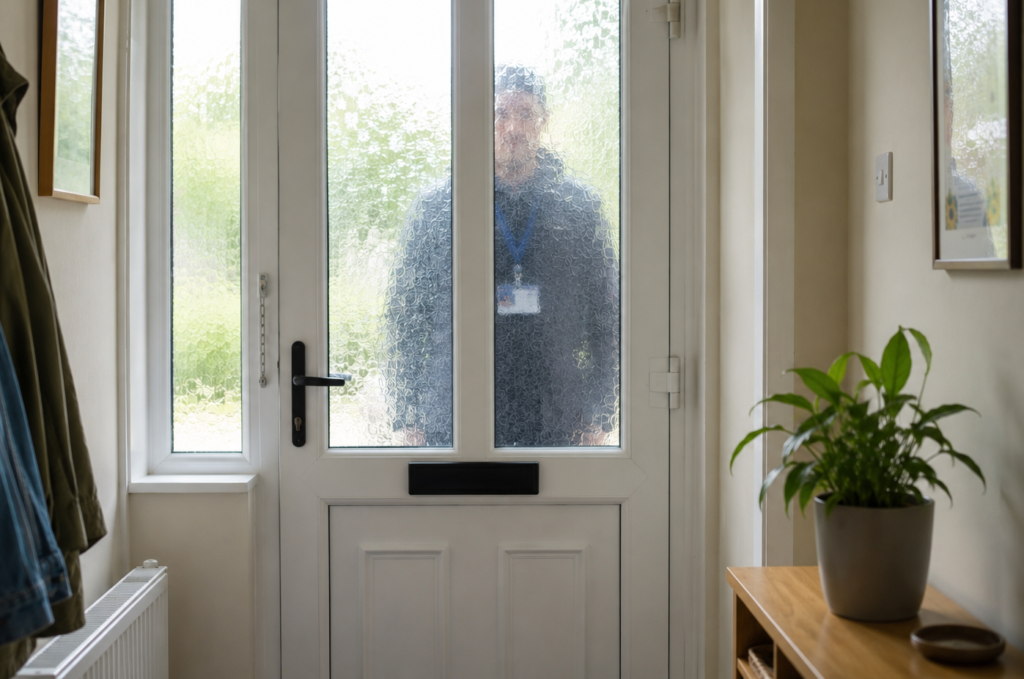
If you have been contacted about a TV licence or received a visit from a TV Licensing officer, you may wonder whether they can force entry into your home.
This is a very common concern, particularly for people worried about enforcement action or legal consequences relating to TV licensing.
The important thing to know is:
👉 TV Licensing officers do not normally have automatic powers to force entry into a property simply because they suspect a licence may be required.
However:
👉 there are some circumstances where court-authorised action may potentially become involved.
In this guide, we’ll explain how TV Licensing visits typically work, when court involvement may happen, and what powers may or may not exist.
Can TV Licence Officers Force Entry? (Quick Answer)
👉 No – not during an ordinary TV Licensing visit.
A TV Licensing officer cannot normally:
- force their way through your door;
- push past you when you answer;
- demand that you let them inside; or
- enter your home simply because you do not have a TV Licence registered at the address.
👉 You do not have to let a visiting officer into your home during a routine visit.
The Code of Conduct on the official TV Licensing website makes it clear that visiting officers must:
“Enter your property only when you give permission, unless a search warrant has been issued.”
Therefore, you have the right to refuse entry*, and the officer should leave if you ask them to do so.
*The main exception is where TV Licensing has obtained a search warrant from a magistrate (or a sheriff in Scotland). A warrant can authorise entry without your permission.
For most people, however, the simple answer is clear: a routine TV Licensing officer cannot force entry into your home.
What Happens For Most People?
The important thing for most people reading this article to know is:
👉 TV Licensing officers cannot force entry into your home.
👉 They cannot push past you if you answer the door.
👉 They cannot demand to be let inside.
👉 You are generally free to decline a visit and close the door.
Most TV Licensing visits are simply optional doorstep conversations where an officer asks questions or requests permission to enter the property.
Many households receive TV Licensing letters or occasional visits without ever allowing an officer inside their home.
For the vast majority of people, a TV Licensing visit does not result in forced entry or a search of the property.
Can You Refuse Entry to TV Licence Officers?
👉 Yes. During a routine visit, you can refuse to let a TV Licensing officer into your home.
You do not have to:
- open the door to them;
- invite them inside;
- allow them to inspect your television or other devices; or
- continue the conversation if you do not want to.
If you answer the door, you can tell the officer that you do not wish to let them inside.
👉 A routine visiting officer cannot force their way past you because you have refused entry.
TV Licensing’s own published guidance says that you have no obligation to grant entry to a visiting officer and that, if asked to leave, the officer should end the visit – unless a search warrant has been issued.
The important exception: refusing entry does not prevent TV Licensing from using other lawful methods of investigation or applying for a search warrant where the legal requirements are met.
Do You Have to Let TV Licence Officers Into Your Home?
👉 No – not during an ordinary visit.
A TV Licensing officer does not have an automatic right to enter your home simply because:
- your address does not have a TV Licence;
- you have received letters from TV Licensing;
- you have made a No Licence Needed declaration; or
- the officer wants to check whether you are watching live television or using BBC iPlayer.
Without a search warrant, entry normally depends on your permission.
👉 You can speak to the officer at the door without allowing them inside.
You can also ask them to leave.
However, if a valid search warrant has been issued, the position is different. The warrant may authorise entry and a search of the premises without the occupier’s permission.
Key distinction:
Routine visit → you do not have to let the officer in.
Visit with a valid search warrant → the warrant can authorise entry without your permission.
When Could Entry Potentially Happen?
Many people worry that TV Licensing officers can simply force their way into a home if they suspect somebody is watching live television without a licence.
In reality, the situation is usually much more limited.
Typical Household Visit
Sarah receives several TV Licensing letters and eventually receives a visit from an officer.
The officer asks if they can come inside.
👉 Sarah declines.
👉 The officer cannot simply force their way into the property.
This is the situation most people are referring to when they ask whether TV Licensing officers can force entry.
If an Officer Wants to Inspect the Property
An officer may ask questions or request permission to enter.
However:
👉 you do not normally have to allow entry simply because an officer asks.
Without further legal authority, a request to enter is usually just that – a request.
Court-Authorised Search Warrants
In rare circumstances, TV Licensing may apply to a court for a search warrant.
If a warrant is granted:
👉 authorised entry powers may become available.
However, this is very different from an ordinary doorstep visit.
A warrant must normally be authorised through a separate legal process and does not arise simply because somebody ignored a letter or declined entry on one occasion.
👉 In addition to requiring a warrant, the police must also be in attendance.
For most households, this situation never occurs.
What is a TV Licensing officer?
TV Licensing officers (sometimes called enquiry officers or visiting officers) may visit properties to investigate whether a TV licence is legally required.
This may happen if:
- no licence is recorded for the address
- there are concerns about unlicensed TV use
- previous letters have not received a response
What Rights Do TV Licence Officers Have?
TV Licence Officers have limited legal powers. They can:
- Knock on your door and ask to speak with you.
- Ask questions about whether you need a TV licence.
- Request permission to enter your home.
However, they generally cannot:
- Force entry into your home.
- Search your property without lawful authority.
- Demand that you answer questions.
- Seize televisions or other equipment.
They have the same basic rights as any member of the public unless acting under a valid court-issued search warrant.
Can TV Licensing get a warrant?
In some circumstances:
👉 TV Licensing may potentially apply for a court warrant.
This is generally considered a more serious step and would usually involve court authorisation.
However:
👉 warrants are not part of routine everyday visits. TV Licensing will only apply for a warrant when there is reason to believe the law is being broken (for example, they suspect you are watching TV without a licence).
What happens if a warrant is granted?
Where a court warrant exists:
👉 enforcement powers may potentially become broader than during a normal visit. Visiting officers will attend with the police if a warrant has been granted.
However:
👉 the exact powers and circumstances can vary, and warrants are generally associated with specific legal procedures rather than ordinary doorstep enquiries.
Should you keep doors and windows closed?
People who are worried about enforcement or investigation may understandably prefer to keep:
- doors locked
- windows closed
- access points secure
while seeking advice or understanding their rights.
In most ordinary situations:
👉 TV Licensing visits do not resemble dramatic forced-entry scenarios often portrayed online or in films.
Example scenario
Person A:
- receives letters about an unlicensed address
- a TV Licensing officer visits
- the occupier speaks briefly at the door but does not invite them inside
👉 this is a fairly typical type of interaction
Person B:
- ignores repeated correspondence over a long period
- court involvement later occurs
- a warrant application is potentially made
👉 this would generally represent a more serious escalation beyond a routine visit
What should you do if a TV Licensing officer visits?
1. Stay calm
Try not to panic or become confrontational. You are typically under no obligation to answer your door. However, if you do decide to speak to the TV Licence Officers, be sure to ask to see official identification before opening the door if possible.
2. Understand why they are visiting
This may relate to:
- no licence being recorded
- investigation of potential licence requirements
- follow-up correspondence
3. Know that routine visits do not usually involve forced entry
In most ordinary situations, entry is not automatic and permission is normally required.
4. Seek advice if you are unsure
Independent advice may help clarify your rights and responsibilities.
Important: every situation is different
The exact position may depend on:
- whether a warrant exists
- court involvement
- the circumstances of the investigation
- applicable legal procedures
This article is general guidance only and should not be treated as legal advice.
Common Myths About TV Licensing Visits
Myth: TV Licensing officers can force entry whenever they want.
❌ False.
In most situations, TV Licensing officers cannot simply force their way into a property.
Myth: You must let a TV Licensing officer into your home.
❌ Usually false.
Most visits involve a request to enter, not a legal requirement to allow entry.
Myth: Refusing entry is automatically a criminal offence.
❌ Usually false.
Declining entry does not automatically mean you have committed an offence.
Myth: An open front door means an officer can walk inside.
❌ False.
An open door does not automatically give somebody permission to enter your home.
Myth: TV Licensing officers can climb through windows or enter through the back garden.
❌ False.
TV Licensing officers do not have ordinary powers to enter properties in this way. They may walk up your front path or driveway in the same way as any other visitor.
However, they cannot enter enclosed areas of your property without permission where there is no implied public access. If your garden is secured behind locked gates or clear boundaries, they should not enter without your consent or legal authority.
Myth: Every visit leads to prosecution.
❌ False.
Most TV Licensing visits do not result in prosecution or court proceedings.
Key takeaway
In most situations, TV Licensing officers cannot simply force entry into your home during a routine visit. More serious enforcement powers would generally require court involvement and specific legal authority.
Frequently Asked Questions
Can TV Licensing officers enter without permission?
In most ordinary situations, entry generally requires permission from the occupier. However, if a warrant has been issued then the police must attend alongside the visiting officer and they may be allowed access without your permission.
Do TV Licence Officers Actually Visit Homes?
Yes. TV Licence Officers do visit some homes, particularly those recorded as having no TV licence. However, not every unlicensed address will receive a visit. Many households receive letters instead, and visits are only one part of TV Licensing’s enforcement process.
If an officer visits, they may ask questions about how you watch television or use BBC iPlayer, but you are under no legal obligation to invite them inside or answer their questions.
Can TV Licensing break into your house?
Routine visits do not involve forced entry in the way people often fear.
Can TV Licensing get a warrant?
In some circumstances, court-authorised warrants may potentially be applied for.
Do TV Licence Officers Have to Show Identification?
Yes. If someone claims to be a TV Licence Officer, you can ask to see official identification before deciding whether to speak with them.
If you have any doubts about their identity, you do not have to let them into your home.
Do you have to speak to TV Licensing officers?
No. People often choose how much engagement they wish to have during routine visits, but it is important to note that you do not have to answer any of their questions.
Can TV Licensing officers push past you?
No. In most situations, TV Licensing officers cannot simply push past you and enter your home.
Can TV Licensing officers enter if the door is open?
No. An open door does not automatically give somebody permission to enter your property.
Can TV Licensing officers enter through a window?
No. TV Licensing officers do not normally have powers to climb through windows or enter a property in this way.
What happens if I refuse entry?
For most people, the officer will simply leave and may record that entry was declined.
Will refusing entry automatically lead to a fine?
No. Refusing entry does not automatically result in a fine or prosecution.
Need further support?
If you’re feeling overwhelmed or unsure what to do next, you’re not alone — there are organisations that may be able to provide guidance and support.
- Citizens Advice – Independent advice on consumer rights and legal issues.
- Official TV Licensing guidance – Information on licensing rules and requirements.
- Samaritans – Confidential emotional support if financial or legal worries are affecting your wellbeing.
These organisations offer support and are not affiliated with this website.
Related Guides
If you’re researching enforcement powers and entry rights, you may also find these guides helpful:
- Can Bailiffs Enter Through a Window? – Learn when entry through a window is possible, when it isn’t, and how bailiff entry powers differ from TV Licensing visits.
- Can Bailiffs Enter Through an Unlocked Door? – Understand how peaceful entry works and why an unlocked door can sometimes make a difference in bailiff cases.
- Can Bailiffs Enter a House When Nobody Is Home? – Find out what normally happens if nobody answers the door and when entry may be possible.
- What Can Bailiffs Do? – A practical overview of bailiff powers, including entry rights, vehicle seizures and enforcement procedures.
Sources and Further Reading
We use official and authoritative sources to help keep our guides accurate and up to date.
👉 TV Licensing: Visiting Officer Code of Conduct
Official guidance explaining how visiting officers should behave, when a visit should end and the exception where a search warrant has been issued.
👉 TV Licensing: Administration of the Licence Fee
Official information on visiting officers, entry to homes and the use of search warrants.
👉 Communications Act 2003: Search Warrant Powers
The legislation governing search warrants for suspected TV licensing offences.
This guide is written in plain English for general information. The official sources above provide further detail on the rules and processes discussed.