Disclaimer: This article is for general information only and does not constitute legal advice. Enforcement rules and vehicle ownership issues vary depending on individual circumstances.
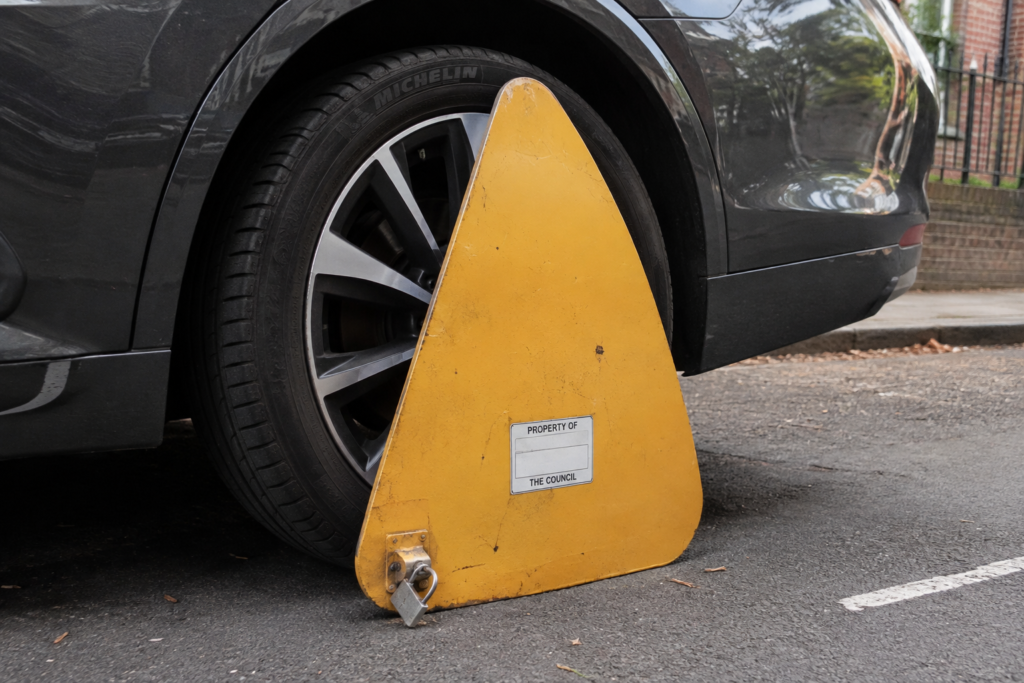
If you rely on a Motability vehicle, you may worry about whether bailiffs can clamp or remove the car during enforcement action.
This can be especially stressful if the vehicle is needed for:
- medical appointments
- mobility needs
- work
- caring responsibilities
- day-to-day independence
The important thing to know is:
👉 Motability vehicles are often treated differently from privately owned cars.
In many situations:
👉 a Motability vehicle may not be considered the debtor’s property in the same way as a personally owned vehicle.
In this guide, we’ll explain how Motability vehicles may be treated during enforcement action and what you should know if you are worried about bailiffs.
Can bailiffs clamp a Motability car? (Quick answer)
A bailiff should not normally clamp or take a Motability Scheme car to recover your debt. Motability cars are leased rather than owned by the customer, and bailiffs generally cannot take goods that belong to someone else.
There may also be separate protection for vehicles used to carry a disabled person.
However, mistakes and disputes can happen. Read on to find out why Motability cars are protected, what evidence you should show a bailiff, and what to do if your Motability vehicle is clamped anyway.
Why Is a Motability Car Protected From Bailiffs?
There are two important issues to understand if a bailiff threatens to clamp or take a Motability vehicle: who owns the car and whether it is protected because of its use by a disabled person.
1. You Don’t Own a Motability Scheme Car
The first protection is straightforward: a Motability Scheme car is leased.
When you obtain a car through the Motability Scheme, you do not buy the vehicle. You lease it using your qualifying mobility allowance.
This matters because bailiffs enforcing a debt can generally take control only of goods that belong to the debtor. They cannot normally take somebody else’s property simply because it happens to be at the debtor’s home.
Official government guidance also specifically identifies leased, rented and hire-purchase items, including cars, as goods enforcement agents cannot take under a warrant of control.
Therefore, if the debt belongs to you but the vehicle belongs to the Motability Scheme’s leasing company, the car should not normally be available to satisfy your debt.
👉 This is different from owning a car outright yourself.
2. Some Vehicles Used by Disabled People Have Separate Protection
There is also a separate exemption under the rules governing enforcement agents.
A vehicle displaying a valid disabled person’s badge is exempt from being taken into control where it is being used for the carriage of a disabled person, or where there are reasonable grounds for believing that this is what it is used for.
This protection is separate from the question of ownership.
For a Motability vehicle, therefore, the fact that the car is leased rather than owned by you is particularly important. Depending on the circumstances, protections relating to its use by a disabled person may also be relevant.
Does Displaying a Blue Badge Matter?
A Blue Badge can provide important evidence that the vehicle is used to carry a disabled person, and the enforcement regulations specifically refer to vehicles displaying a valid disabled person’s badge.
However, you should not rely solely on the badge to prove that a Motability vehicle does not belong to you.
If an enforcement agent questions the vehicle, it is useful to be able to show evidence that it is supplied under the Motability Scheme and is leased rather than owned by you.
Can bailiffs remove a Motability vehicle?
In many cases:
👉 enforcement agents may avoid removing Motability vehicles once the position is clarified.
However, problems can sometimes arise if:
- the vehicle is incorrectly assumed to belong to the debtor
- proof of the Motability arrangement is not immediately available
- ownership details are unclear
Because of this:
👉 keeping supporting documents accessible may help if enforcement action occurs.
How can you prove a car is a Motability vehicle?
Helpful evidence may include:
- Motability lease agreements
- insurance documents
- vehicle paperwork
- Motability Scheme correspondence
- benefit award documentation where relevant
If possible:
👉 keep copies easily accessible.
What Should You Do If a Bailiff Clamps Your Motability Car?
If a bailiff clamps your Motability vehicle, do not attempt to remove or damage the clamp yourself.
Instead, make it clear to the enforcement agent that the vehicle is supplied through the Motability Scheme and does not belong to you.
1. Tell the Bailiff the Car Is Leased
Explain that the vehicle is a Motability Scheme lease car and that you are not its owner.
If possible, show the enforcement agent documentation confirming the lease.
2. Provide Evidence
Useful evidence could include your Motability lease documentation or other paperwork identifying the vehicle and showing that it is supplied under the Motability Scheme.
If applicable, you can also point out that the vehicle is used to carry a disabled person and show a valid Blue Badge.
Keep copies or photographs of any evidence you provide.
3. Contact the Enforcement Company
If the enforcement agent does not remove the clamp, contact the enforcement company directly.
Explain that the vehicle is leased through the Motability Scheme and provide evidence of third-party ownership.
Make a note of:
- the enforcement agent’s name
- the enforcement company
- the date and time
- the vehicle registration
- any reference numbers
- what you were told
4. Contact Motability
You should also consider contacting Motability if an enforcement agent has clamped or threatened to remove your Motability vehicle.
They may be able to confirm the vehicle’s status and advise you about the documentation available to demonstrate that the car is leased.
5. Complain If Necessary
If a bailiff refuses to deal appropriately with evidence that the vehicle does not belong to you, you can make a complaint.
Government guidance specifically identifies taking goods belonging to somebody else as one of the reasons you can complain about a bailiff.
Depending on the circumstances, you may also want to get free independent debt advice before taking further action.
The important thing is to act quickly and provide clear evidence of ownership, rather than assuming that the enforcement company will automatically know that your vehicle is supplied through Motability.
6. Seek advice
Independent advice organisations may help explain your options.
7. Understand related vehicle enforcement rules
You may also find these guides helpful:
- Can Bailiffs Take Your Car on Finance?
- Can Bailiffs Take Someone Else’s Property?
- What Can Bailiffs Take?
- Can Bailiffs Take a Car on Finance?
What about adapted vehicles or disability equipment?
Where a vehicle is essential for disability or mobility needs, additional concerns may arise regarding proportionality and vulnerability.
In some circumstances:
👉 vulnerability considerations may potentially affect how enforcement action is handled.
Important: every situation is different
The exact position may depend on:
- ownership arrangements
- the type of enforcement action
- the circumstances involved
- whether vulnerability considerations apply
This article is general guidance only and should not be treated as legal advice.
Key takeaway
In many situations, Motability vehicles may receive additional protection because they are commonly leased rather than owned outright by the person using them. If bailiffs threaten to clamp or remove a Motability car, gathering supporting documents and seeking advice quickly may help clarify the situation.
Frequently Asked Questions
Does a Motability car legally belong to the driver?
In many cases, the vehicle is leased through the Motability Scheme rather than owned outright by the individual user.
Can bailiffs tow away a Motability car?
In many situations, enforcement may become more complicated once the Motability arrangement is identified.
Should I keep proof that the vehicle is a Motability car?
Yes – keeping lease agreements or related paperwork accessible may help clarify ownership quickly.
Can vulnerability affect enforcement action?
Potentially yes. Vulnerability considerations may sometimes affect how enforcement is approached.
Need further support?
If you’re feeling overwhelmed or unsure what to do next, you’re not alone – there are free, trusted organisations that can offer confidential advice and support.
- StepChange Debt Charity – Free, impartial debt advice and personalised support with managing and repaying debt.
- Citizens Advice – Independent advice on your rights, dealing with creditors, and resolving disputes.
- National Debtline – Clear guidance and practical tools, including template letters and advice on handling enforcement action.
- Samaritans – Confidential emotional support if you’re feeling stressed or anxious about your situation.
These organisations offer free support and are not affiliated with this website.